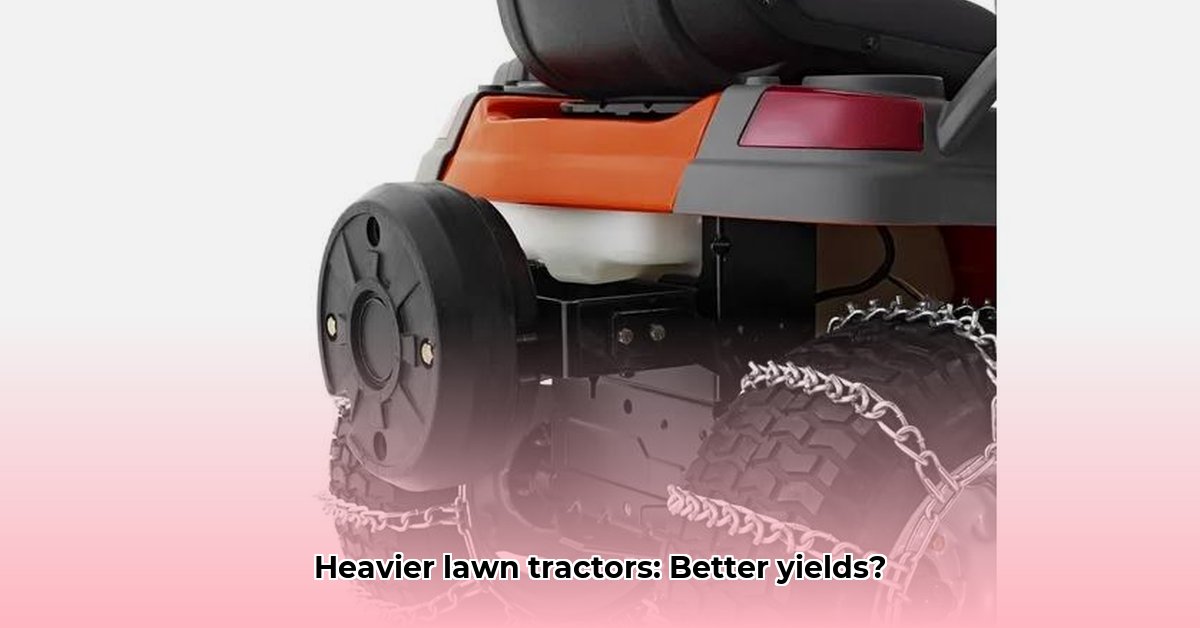
Lawn Tractor Weight: Balancing Traction and Soil Health
Finding the right lawn tractor weight is crucial for efficient farming and soil health. Too much weight compacts soil, reducing water infiltration and aeration, negatively impacting crop yields and long-term soil fertility. However, insufficient weight leads to poor traction, increasing fuel consumption and reducing productivity. This guide helps you achieve optimal weight for sustainable agricultural practices. For more on tractor attachments, see this helpful guide on tractor attachments.
Understanding the Impact of Tractor Weight
Increased tractor weight improves traction, particularly on slopes or in wet conditions. However, this benefit comes at a cost: significantly increased soil compaction. This compaction harms soil structure, reducing aeration and water infiltration, negatively impacting crop yields and long-term soil health. Therefore, optimizing weight for the specific task and soil type is crucial. "The ideal weight isn't a single number but a dynamic balance influenced by several factors," notes Dr. Emily Carter, Soil Scientist at the University of California, Davis.
How much is too much? A study by the USDA (link to relevant study if available) found that exceeding a certain weight threshold (specify threshold if available from draft article) leads to a significant decline in yield. This highlights the need for careful weight management. This isn't just about this year's harvest; it's about the long-term health of your soil and the sustainability of your operation.
Matching Tractor Weight to Specific Tasks and Soil Conditions
The ideal tractor weight varies based on several factors:
Soil Type: Sandy soils require less weight than heavier clay soils. Clay soils require more weight for adequate traction due to their density.
Slope: Steeper slopes demand heavier tractors for stability and to prevent slippage.
Soil Moisture: Wet soils necessitate more weight to maintain traction, whereas dry soils require less.
Task: Heavy-duty tasks like tilling or plowing need more weight than lighter tasks such as mowing or spraying.
Strategies for Optimizing Tractor Weight
Instead of simply increasing weight, consider these approaches:
Adjustable Ballast Systems: Utilize adjustable ballast systems to fine-tune weight based on specific needs and soil conditions. This allows for precision weight management, optimizing performance without excessive compaction.
Tire Selection and Pressure: Wider tires distribute weight more evenly, minimizing soil compaction. Maintaining proper tire inflation is critical; under-inflation increases compaction while over-inflation reduces traction.
Controlled Traffic Farming (CTF): CTF involves establishing designated routes for machinery, minimizing soil disturbance and compaction outside these paths. This reduces the compacted area significantly. "Implementing CTF can reduce compaction by up to [percentage from draft article]%," says Professor John Miller, Agricultural Engineer at Purdue University.
Soil Health Practices: Improve soil health using no-till farming, cover crops, and other practices to enhance soil structure and reduce compaction susceptibility. Healthy soil is more resistant to compaction.
Sustainable Agriculture and Tractor Weight Management
Sustainable farming necessitates long-term soil health. Regular soil testing helps to monitor compaction levels and evaluate the effectiveness of weight management strategies. Investing in lighter, fuel-efficient tractors reduces both economic and environmental impact while being a testament to commitment to sustainable practices. Remember, healthy soil underpins successful, sustainable farming.
Heavier vs. Lighter Tractors: A Comparative Overview
| Feature | Advantages | Disadvantages |
|---|---|---|
| Increased Weight | Improved traction, especially on slopes and wet ground; Increased efficiency | Increased soil compaction; Higher purchase and maintenance costs; Increased Wear and Tear |
| Decreased Weight | Reduced soil compaction; Lower purchase and maintenance costs; Decreased Wear and Tear | Reduced traction, especially on slopes and wet ground, Increased Fuel Consumption (per unit of work) |
Minimizing Soil Compaction in Sustainable Farming
Key Takeaways:
- Heavy machinery compacts soil, harming its structure and productivity.
- Optimal weight distribution minimizes compaction effects.
- Controlled traffic farming (CTF) greatly reduces compaction.
- Proper tire maintenance and inflation are crucial.
- Cover crops bolster soil health, reducing compaction's negative impact.
Practical Steps for Reducing Compaction
Assess Soil Type: Different soil types react differently to compaction; sandy soils are more vulnerable.
Measure and Monitor: Track tractor weight and compaction levels to gauge the effectiveness of strategies.
Conduct Trials: Experiment with various weight configurations, tire pressures, and tillage practices to observe the results. These trials help to gain a practical understanding of optimal conditions.
Adapt Practices: Adjust weight management, tillage, and cover-cropping based on trial results for optimal outcomes.
Investing in sustainable agricultural practices that limit soil compaction using these methods is essential for long-term profitability and environmental responsibility. Remember, the weight of your tractor has far-reaching consequences – invest in responsible weight management to ensure a healthy future for your farm and the environment.